Communication theory: OBVIO

OBVIO app for your phone
[1]. Author’s Reasoning:
How Communication Theory Operates in the Field of Design
Communication theory reframes visual and digital design products not as isolated aesthetic choices, but as systems for transmitting and constructing meaning. Through this lens, design transcends mere decoration to become a full-fledged, active participant in the communication process — one that fundamentally shapes how a message is perceived by the user.
This dynamic is especially evident in educational and media environments, where the core challenge lies not in mechanically delivering data, but in fostering genuine understanding. Communication theory equips designers with analytical tools to discern why some messages feel clear and accessible.
In this way, designing an educational platform evolves into a form of dialogue. It orchestrates step-by-step progression, levels of detail, learning rhythm, and feedback mechanisms. Thoughtful communication lowers the entry barrier to complex domains, instills a sense of control, sustains motivation, and ultimately determines the depth of knowledge assimilation.
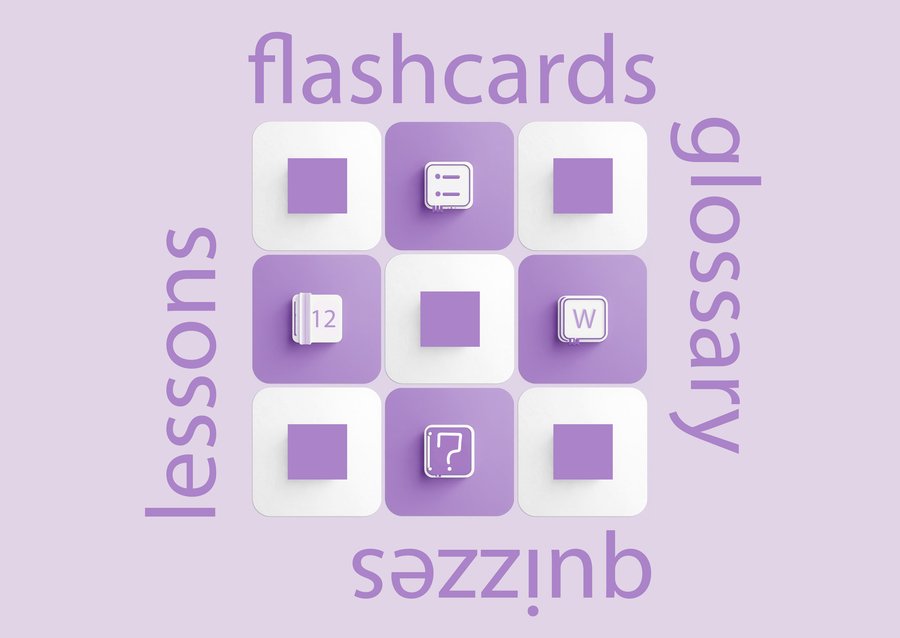
Types of OBVIO’s learning programm
[2]. Presentation of the Brand for a General Audience
«OBVIO» [derived from the word «obvious]
- is an online platform built as a digital app. Its main goal is to turn complex, in-depth knowledge into clear, highly structured formats.
Outdoor advertising of OBVIO
The project is based on the idea that misunderstandings often stem not from the user’s lack of preparation, but from poor communication organization.
If material feels too complex or unreadable, it signals a need to rethink how it’s presented.
[Brand mission].
Lower the entry barrier to tough topics without simplifying the content or sacrificing depth. «Obvio» keeps the subject’s accuracy and complexity intact but transforms its delivery: it breaks material into manageable, step-by-step blocks, adds visual supports, and includes built-in checks for understanding. This makes learning feel controlled and effective.
The platform features these key formats and elements: a homepage and topic catalog, lesson pages (with text, video, and diagrams), summary flashcards for review and social sharing, tests, quizzes, and knowledge checks, a glossary («complex term — simple explanation»), personalized learning paths, and a Professional mode for deeper detail.
Audience 1: General users (Beginners)
Home page of OBVIO for general users
For a broad audience, «Obvio» comes across as an approachable, supportive learning service. It targets non-specialist students, adults switching careers, and people overwhelmed by information overload.
The learning flow uses a chain of micro-steps: each screen focuses on one key idea, progress is always visualized, and understanding checks are woven right into the process. The tone is neutral, friendly, and encouraging. No heavy academia or pressure.
Audience 2: Professionals (Experts)
For pros, «Obvio» works as an explanation system and a model for knowledge communication. Professional mode unlocks denser phrasing, theoretical notes, source links, and the logic behind project/method choices. It’s seen not just as a learning tool, but as one for analysis, reflection, and real-world professional use.
Home page of pro mode for experts
In both modes, the app features a mascot character who guides lessons, appears on flashcards, in quizzes, and throughout the experience.
[3]. Understanding Communication Differences for Professionals and the General Public
Splitting communication strategies for broad and professional audiences is a core principle for «OBVIO.» The differences between these groups go beyond knowledge levels—they involve motivation, expectations, and how information is processed.
For the general audience («Beginners»), reducing anxiety, clarity, safety, and time efficiency are key. Communication must ease tension, skip heavy terminology, and create a clear sense of steady, secure progress. Design plays a supportive role: intuitive navigation, progress confirmations, and stress reduction.
Professional audiences («Experts»), by contrast, demand maximum precision, solid arguments, methodological transparency, and source access. They need to grasp the system’s underlying principles. Design shifts to an analytical function: it supports working with logic, structure, and reflection.
Supplies in OBVIO brand colors
These differences show up in information processing paths (per the Elaboration Likelihood Model, ELM):
■ For the general audience, the peripheral route kicks in: focus on cues like simplicity, visual clarity, aesthetics, and short formats.
■ For professionals, the central route engages: emphasis on the core—arguments, logical structure, theoretical foundations, and expert data.
In «Obvio, ” this approach comes to life through distinct interaction modes with the same content. The core material stays consistent, but its presentation adapts: depth of delivery, terminology level, explanations, and links. This keeps the brand cohesive while flexibly tailoring communication to different user needs and expectations.
[4]. Communication Theory as the Foundation of Design Decisions
The communication strategy for the «Obvio» project draws from a deliberate synthesis of theoretical approaches. These act as operational design filters, shaping the platform’s structure, material delivery logic, and tailored communication for target audiences.
Core: Semiotics and Phenomenology (The Code & The Experience)
Semiotic and phenomenological approaches formed our primary filter and foundation. They ensured «Obvio» is not just a data repository, but an environment for lived experience and gradual meaning-making.
Mockup of web version of OBVIO
[Semiotics]: The interface and content function as a sign system (The Code). Recurring, modular elements—like flashcards, diagrams, and minimalist visuals—serve as reliable signs of order and clarity. Minimalist design cuts extraneous interpretations, letting content signs take center stage.
[Phenomenology]: This shifted focus to user experience as a process (The Experience). Understanding builds through sequenced actions and reflection: study, relate, check, reinforce. Design creates space for users to reach insights on their own.
Audience Segmentation and Message Logic:
Communication splits for general and professional audiences blend three models: Social Identity Theory, ELM, and Narrative Approach.
Mockup to illustrate how OBVIO app looks on a phone
Social Identity Theory (SIT):
This segmented users not just by knowledge level, but by role and expectations. [Beginners] need a safe, supportive entry. [Professionals] crave transparent structure and argumentation, aligning with their professional identity.
Elaboration Likelihood Model (ELM):
This strategically divided persuasion and delivery methods: - General audience (Peripheral route): Persuasion relies on pathos (reducing anxiety, building control) and aesthetics. Emphasis on simplicity and visual clarity.
- Professionals (Central route): Persuasion leans on logos and deep ethos. It offers logical arguments: access to theoretical foundations, structure, and methodology.
Narrative Approach (The Story):
Learning unfolds as a sequential journey from ignorance to competence. Narrative drives engagement: we invite users into their own story of mastering complex knowledge.
Systemic Level and Practical Principle
At the system level, «Obvio» builds lasting user habits (regular returns to materials, active review, testing, and conscious mode-switching). Through these patterns, users master not just specific knowledge, but methods for handling complex information.
Communication theories thus provided more than a theoretical backdrop—they delivered practical tools for decisions at every project stage.
Maria Mordvinova, Olga Solovyova «Communication Theory: Bridging Academia and Practice», Smart LMS [online course], 2025
Obvio [images] // Kharkova Stefaniya, Anastasiya Palchikova, Jamilya Gasanova. Студенческое портфолио HSE University Art and Design. (URL: https://hsedesign.ru/project/42ee5c2dbd0646af879842404b3c4050). Date of request: 15.11.2025.