Communication theory: BOOP
General Theoretical Framework: Communication Theory in the Field of Design
Design, particularly branding and packaging design, is fundamentally a discipline of strategic communication. It moves beyond aesthetics to become a system for encoding and transmitting messages, creating meaning, and building relationships with an audience—core tenets of communication theory as outlined in the course.
From a semiotic tradition, design is a language of signs and symbols. A logo, a color palette, an illustration, and a typeface are not merely decorative; they are signs that carry culturally and contextually embedded meanings. The designer acts as the sender, encoding a specific brand narrative and set of values into these visual signs. The consumer becomes the receiver, actively decoding these signs based on their own experiences, culture, and context. The goal is a shared understanding—the successful transfer of the intended meaning from brand to user.
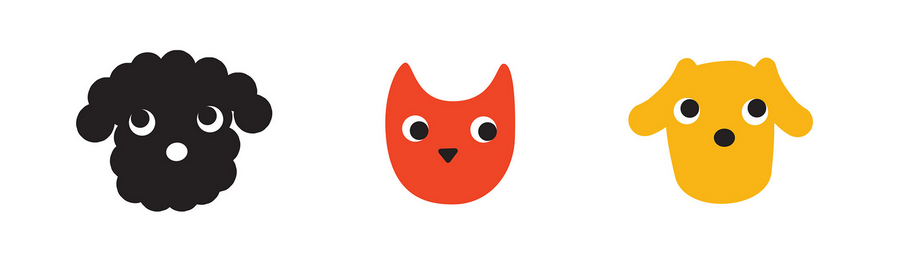
Sku illustrations separating shampoo by pet hair type
The socio-cultural tradition emphasizes that communication reproduces social order and shared realities. Branding participates in this by shaping and reflecting cultural practices and values.
A pet care brand doesn’t just sell shampoo; it engages with the culture of pet ownership, the emotional bond between humans and animals, and societal trends toward mindful consumption and experiential living.
Design must craft a persuasive message that can modify beliefs, attitudes, and ultimately, behavior (purchase, loyalty). This involves considering both central and peripheral routes (Elaboration Likelihood Model). For a low-involvement product like shampoo, the initial appeal is often peripheral: charming illustrations (liking), a sense of fun (emotional appeal), and clear visual categorization (simplicity). However, to build lasting loyalty, the design must also support central route processing by communicating tangible benefits (fur-type specialization, ingredient quality) for the motivated, involved pet owner.
Brand Presentation for a Broad Audience
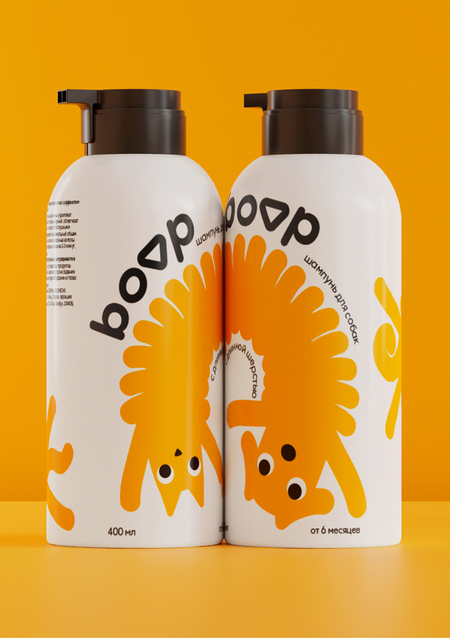
The bright palette and playful characters on the packaging attract the attention of a young audience and also broadcasts the playful mood of the brand.
«Boop transforms the necessary chore of pet grooming into a joyful, shared moment of playfulness and connection»
For Whom
Modern pet owners, primarily millennials and Gen Z, who view their pets as family members. They seek not just functionality but experiences that enhance their bond with their pet. They are visually savvy, value authenticity, and respond to brands with personality and purpose.Core Tasks and Communication Objectives
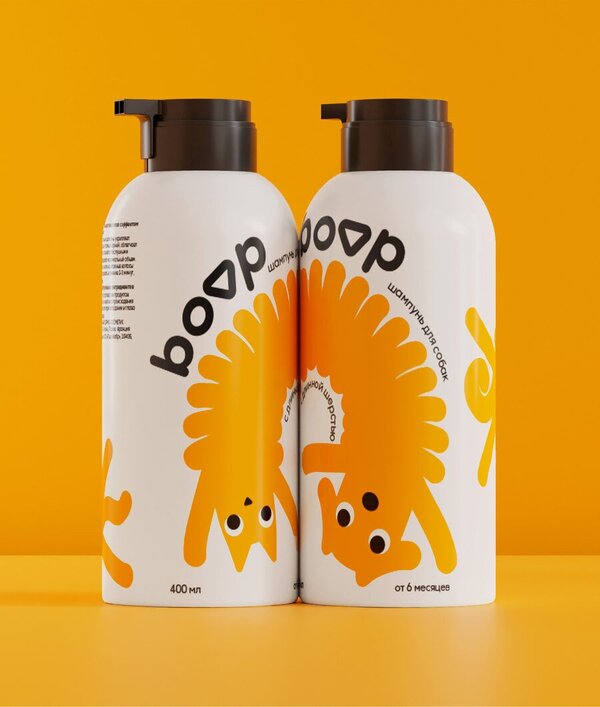

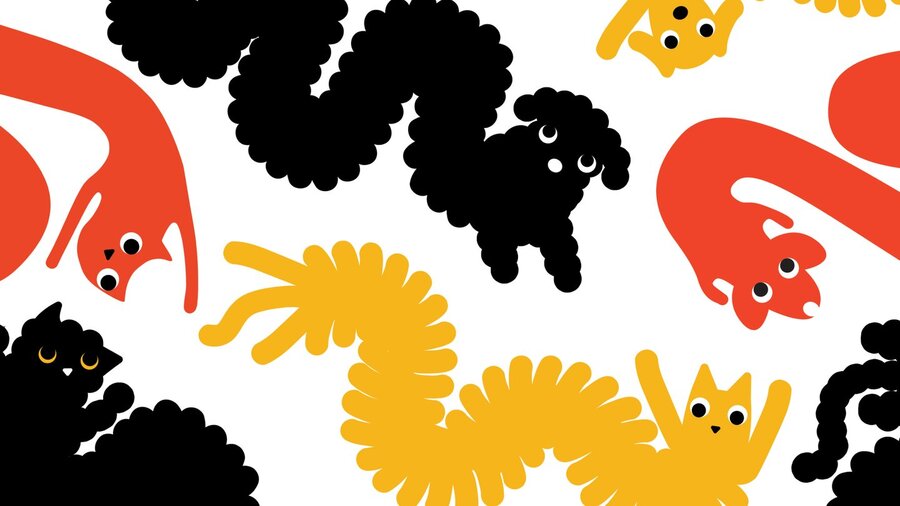
Simple 2D illustrations of happy animals are based on the positive experience of the buyer, making him remember that caring for an animal is also fun.
Reframe Perception
Shift the cognitive schema of «grooming» from «stressful task» to «fun ritual.» This aligns with framing theory — we are deliberately selecting and emphasizing the positive, playful aspects of bath time while excluding associations of struggle. ㅤBuild Emotional Connection
Use narrative paradigm principles. Boop isn’t just selling a product; it’s telling a story about playful pets and happy owners. The illustrations on the package are frozen moments of that story, inviting the owner to become a character within it. ㅤSimplify Choice & Communicate Efficacy
Reduce cognitive load for the buyer. Using distinct, charming illustrations for each fur type (curly, short, long) acts as an immediate, intuitive visual symbol (semiotics) that facilitates quick, accurate decoding. This builds trust by demonstrating specialized care. ㅤCreate Shareability
Design a brand world so visually distinctive and heartwarming that it encourages user-generated content and social sharing. This leverages the socio-cultural aspect of communication, where users become co-creators of the brand’s narrative in digital spaces.The clear shape of the wool in the drawings makes it easier to find the right product.
Brand Values & Their Communication:
Joy & Playfulness
Communicated primarily through the dynamic, whimsical illustrations and the playful brand name «Boop.» ㅤEmpathy & Care
Communicated through the specialized product formulations (for different fur types) and the empathetic premise of reducing stress for both pet and owner. ㅤModernity & Design Intelligence
Communicated through clean typography, a cohesive color system, and the strategic use of illustration as a functional categorization tool.Presentation for a Professional Design Audience
The Boop strategy is a case study in applied visual rhetoric and systemic semiotics.
The warm colors on the packaging are associated with joy and evoke warm feelings for the buyer.
Visual Rhetoric
Every element is a persuasive argument. ㅤ llustrative Style The «wet-fur-as-playful-caterpillar» motif is the core invention. It’s a novel, ownable visual metaphor that argues for fun. The arrangement of these illustrations as dominant, hero imagery on the package immediately establishes brand tone. ㅤ Color & Typography A supporting white color contrasted with warm, energetic accents (joy). Typography is friendly (rounded forms) but clean and legible, establishing credibility. ㅤ Digital Extension The visual language is designed to be modular and adaptable for motion graphics, website icons, and app interfaces, ensuring narrative coherence across all touchpoints.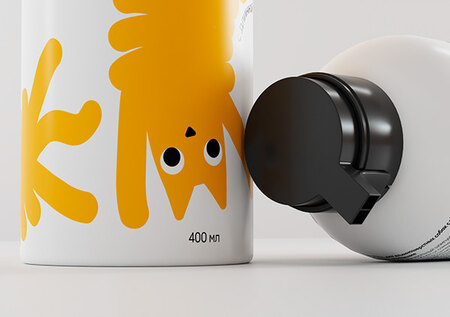

The text on the package is clear due to the roundness of the shapes.
Semiotic System as Functional UI
The three illustration styles form a strict, internally consistent code. ㅤ Signifier (Form) Illustration of animal with elongated, looping and separate curls. ㅤ Signified (Concept) «Curly Fur Formula» ㅤ Sign The complete understanding that this bottle is for a pet with curly hair. ㅤ This system turns the package into a user interface, where decoding is instant and effortless, reducing friction in the purchase journey.The playful style with its constants is easily transferred to other media.
Packaging as a Touchpoint in a Broader Media Ecology
The physical bottle is not the end of communication. It’s designed to be photogenic for social media, integrating into the user’s digital media ecosystem.The Strategic Process: Bridging Theory and Practice
Our strategy was built by selecting and synthesizing specific theoretical lenses to solve a practical business and design problem.
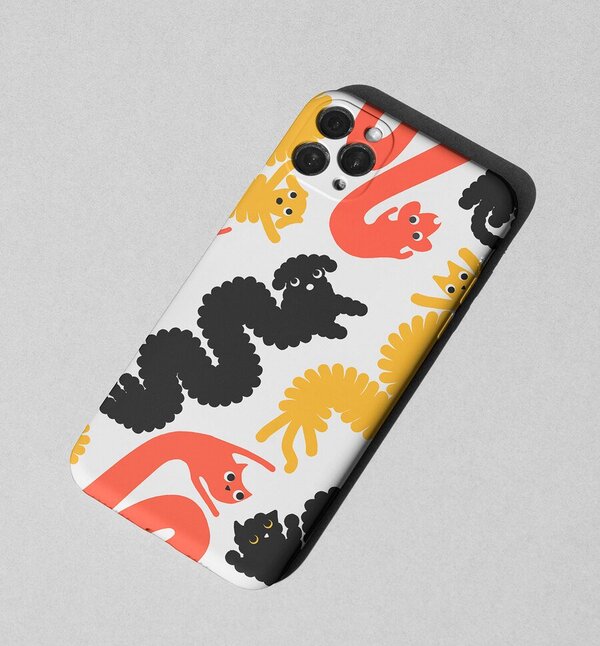

A merch based on the theme of love for a pet helps to change the stress-filled routine of the owners.
Problem Diagnosis through an Interpretive Lens
We started with interpretive research. Through ethnographic observation and in-depth interviews with pet owners, we sought to understand the deep meanings attached to grooming. We found it was often a source of guilt («my pet hates it») and stress, framed as a «chore.» This human-centered insight defined our core challenge: not to design a better shampoo bottle, but to reframe a lived experience.The unusual nature of the illustrations helps to capture the buyer’s attention not only on the packaging, but also on outdoor media.
Core Strategy from Framing & Narrative Theory
To reframe, we turned to framing theory. We consciously chose to select and emphasize the potential for joy and bonding in bath time, while excluding visual references to stress or clinical efficiency. This led directly to the narrative paradigm. We asked: «What story do we want pet owners to tell themselves?» The answer was a story of playful companionship. The illustrations became the key visual fantasy themes of this story — heroic, joyful pets — designed to create symbolic convergence among a community of fun-loving pet owners.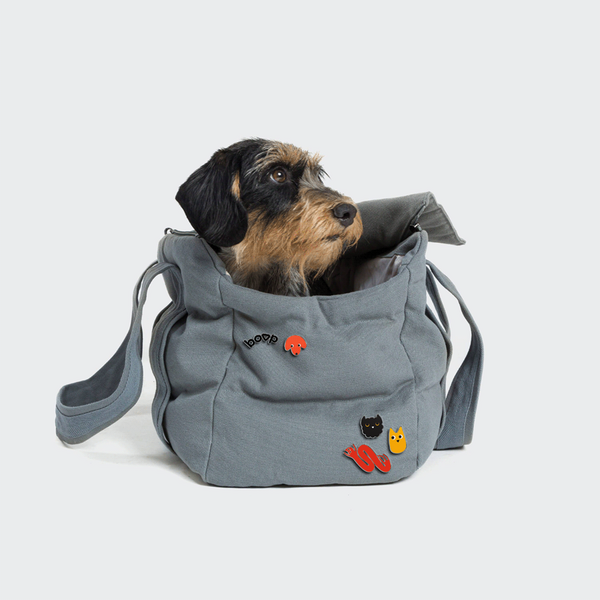
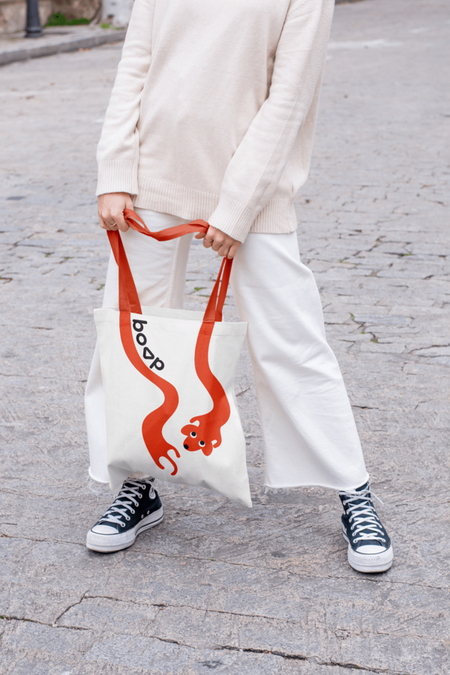
A merch based on the theme of love for a pet helps to change the stress-filled routine of the owners.
Execution through Semiotics and Elaboration Likelihood Model (ELM)
With the «why» (reframe through narrative) and «what» (joyful story) defined, we used semiotics to build the «how» — the visual language. Simultaneously, we planned for dual processing from the ELM: ㅤ Peripheral Route Cues The immediate grab. Whimsy, charm, and beauty attract attention and create positive affect. ㅤ Central Route Support For the detail-oriented consumer, the design facilitates elaboration. Clear fur-type differentiation communicates expertise. Ingredient call-outs and benefit-driven copy are presented with clean hierarchy, supporting a rational decision.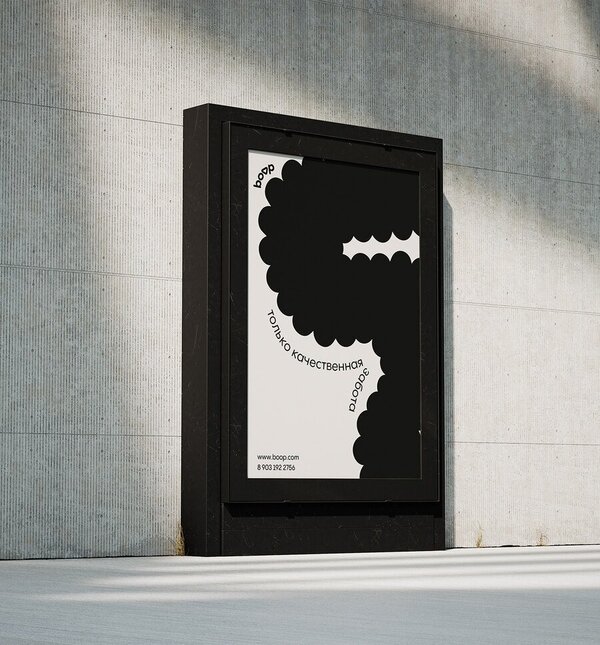
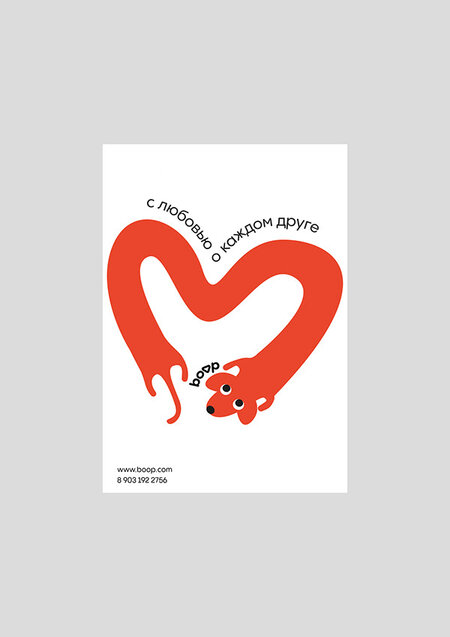
An example of using illustrations in outdoor advertising with copywriting.
Integration into the User’s Media Life
Recognizing that brand communication today is fragmented, we used media ecology as a final check. We ensured the core visual signifiers (the illustrations) would be effective across mediums—from the physical medium of the bottle to the digital mediums of Instagram and TikTok—understanding that the user’s experience across this ecosystem is the ultimate content of the brand message.A merch based on the theme of love for a pet helps to change the stress-filled routine of the owners.
The strategy is not a decoration of a product with theory. It is a theory-informed process: from interpretive diagnosis, to strategic reframing, to the construction of a coherent symbolic system designed for both emotional appeal and functional clarity, all while living cohesively in a modern media environment.
Chandler, D. Semiotics: The Basics. 3rd ed. London: Routledge, 2017 // Routledge.URL: https://www.routledge.com/Semiotics-The-Basics/Chandler/p/book/9781138232938 (дата обращения: 12.12.2025).
Fiske, J. Introduction to Communication Studies. 3rd ed. London: Routledge, 2011 // Routledge.URL: https://www.routledge.com/Introduction-to-Communication-Studies/Fiske/p/book/9780415596525 (дата обращения: 12.12.2025).
Hall, S. Encoding/Decoding // Culture, Media, Language. London: Routledge, 2003. P. 117–127.URL: https://www.routledge.com/Culture-Media-Language/Hall-Hobson-Lowe-Willis/p/book/9780415259000 (дата обращения: 12.12.2025).
McQuail, D. McQuail’s Mass Communication Theory. 6th ed. London: Sage Publications, 2010 // Sage.URL: https://uk.sagepub.com/en-gb/eur/mcquails-mass-communication-theory/book233223 (дата обращения: 12.12.2025).
Petty, R. E., Cacioppo, J. T. Communication and Persuasion: Central and Peripheral Routes to Attitude Change. New York: Springer, 1986 // Springer.URL: https://link.springer.com/book/10.1007/978-1-4612-4964-1 (дата обращения: 12.12.2025).
All images are taken from Ksenia Ivanova’s project: https://hsedesign.ru/project/6a542df11bb74acba2f3a3637c92803a (дата обращения 13.12.2025)